
Services

Services

A technical activity essential to safe navigation, environmental protection and the efficiency of Brazilian maritime trade.

01 — What pilotage is

A technical advisory service to the master

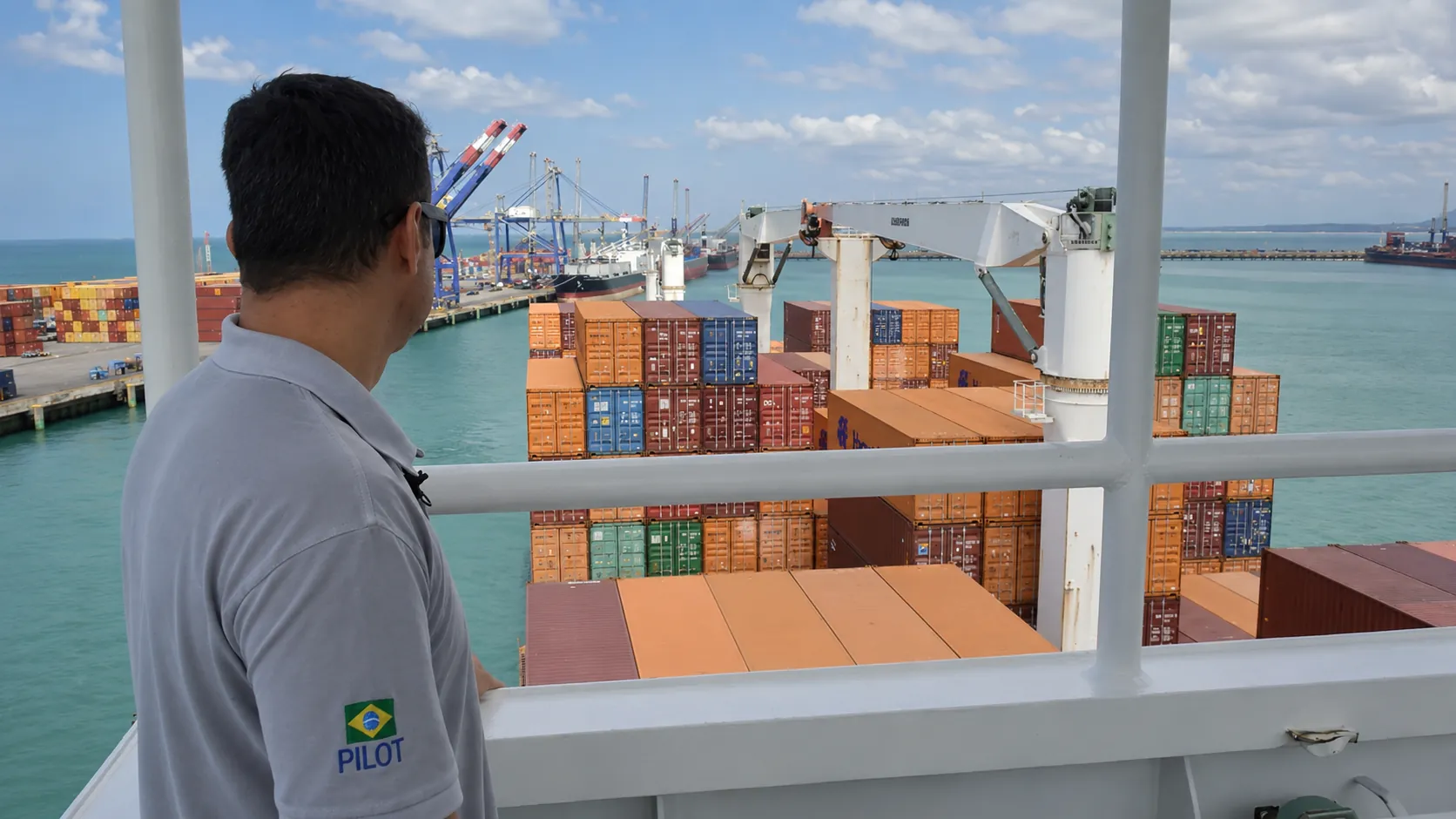
Pilotage is the set of professional activities providing advisory support to the master, required by local peculiarities that hinder the free and safe movement of vessels within Pilotage Zones established by the Brazilian Maritime Authority.

The pilot boards the ship, conducts the maneuver in restricted waters and advises the master until a safe position is reached — whether berthing, unberthing or transiting an access channel.
Legal framework — Law No. 9,537/1997 (LESTA)

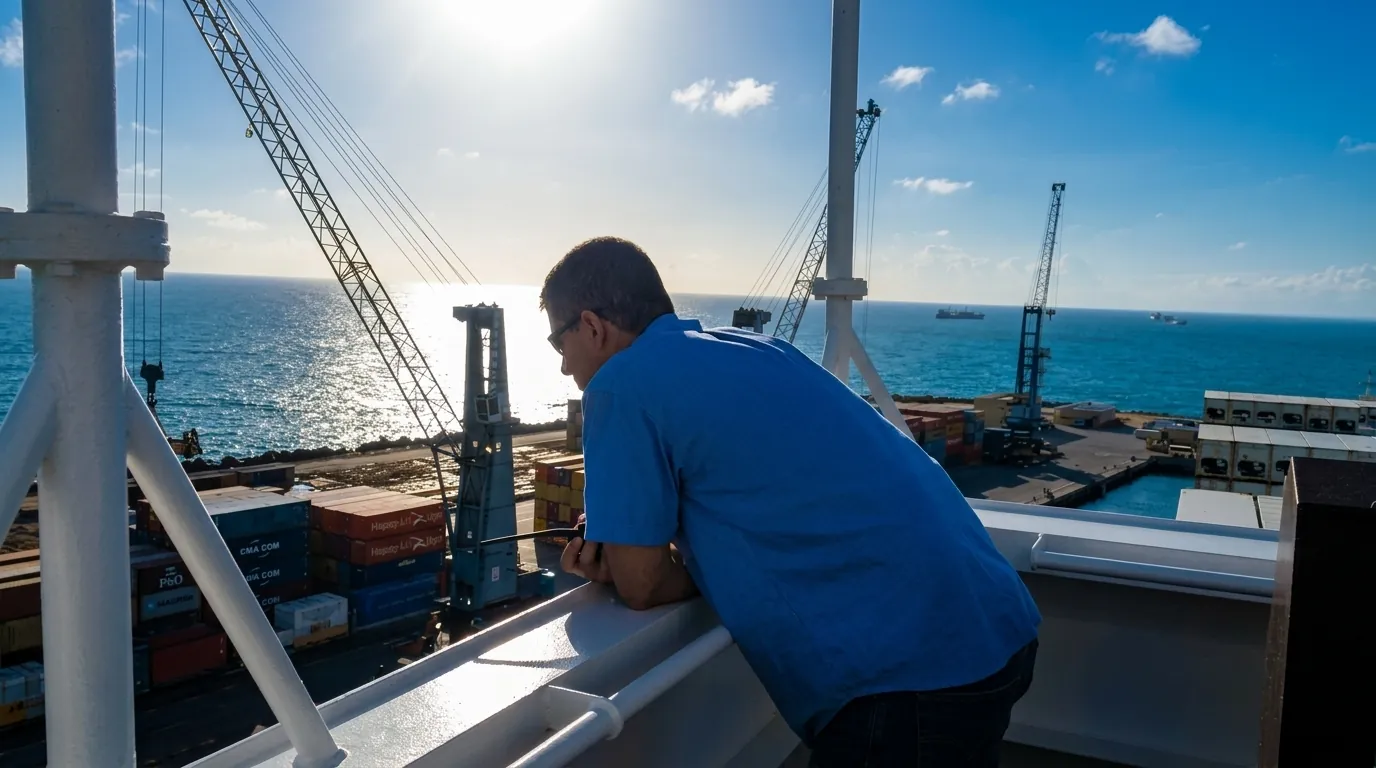
The Waterway Traffic Safety Law (LESTA), regulated by Decree No. 2,596/1998 and further detailed by NORMAM-311 of the Maritime Authority, establishes pilotage as a compulsory service in the zones so declared. In 2024, Law No. 14,813 updated LESTA to provide legal certainty and regulatory stability for pilotage services.

The compulsory requirement stems from the public interest in mitigating the risks inherent in navigation in restricted waters — collisions, groundings, spills — whose consequences directly affect the safety of human life, the vessels, the environment and port assets.

Private activity of public interest

As amended by Law No. 14,813/2024, LESTA defines pilotage as an essential activity of a private nature, whose purpose is to secure the public interest in safe navigation, the safeguarding of human life and the protection of the environment. The service is performed exclusively by pilots certified by the Maritime Authority and must be permanently available, with uniform technical standards in every Pilotage Zone.
02 — The pilot's role

Technical conduct of ships in restricted waters

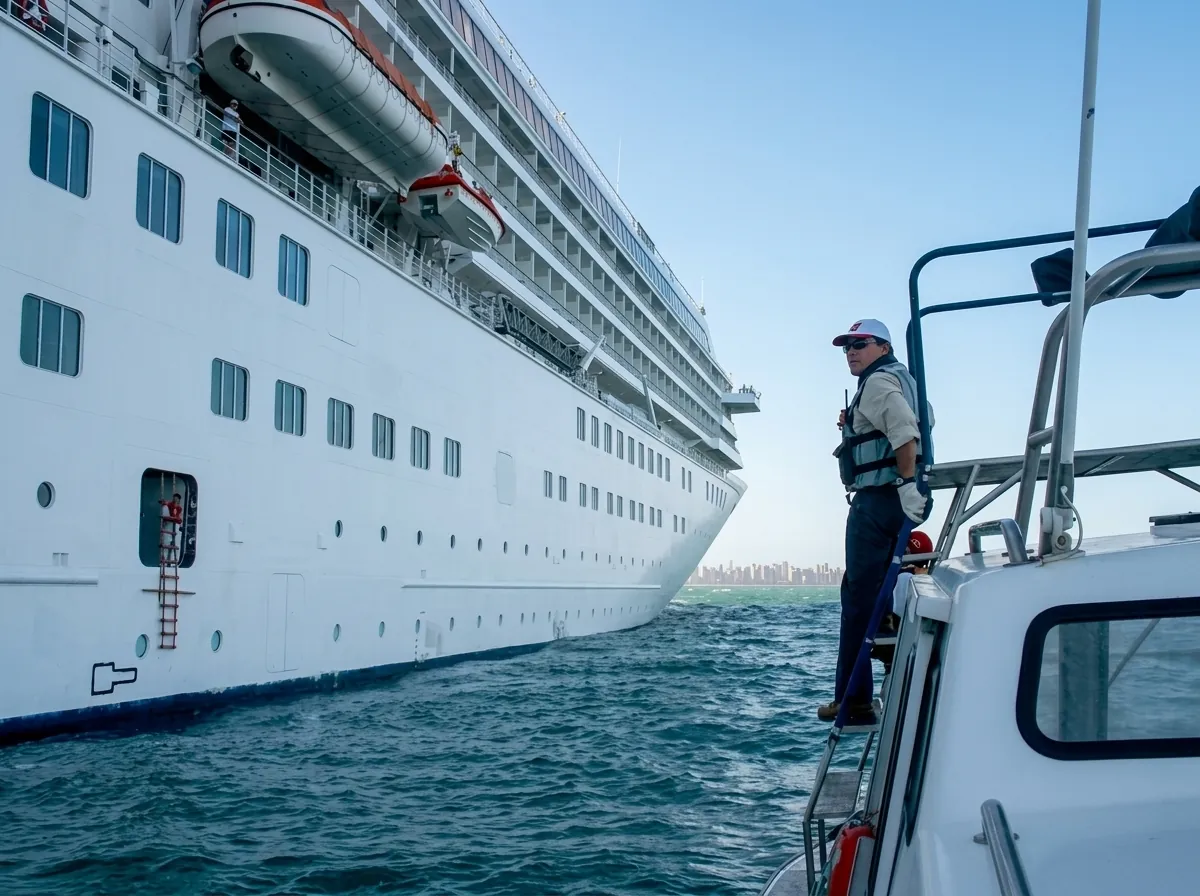
The pilot is the professional who performs the pilotage service. Pilots have extensive experience and technical knowledge of navigation and ship handling, as well as of the local features of the Pilotage Zone in which they operate.

Beyond conducting the maneuver itself, the pilot coordinates the actions of tugs, mooring launches and shoreside mooring teams — all factors that directly influence the ship's maneuver. The role is performed aboard the ships, to which pilots are transferred by launches built to special standards that ensure safe boarding.

Certification — Brazilian Navy selection process

Access to the profession is granted through a competitive selection process administered by the Brazilian Navy. After specialized training and passing a practical exam conducted by the Maritime Authority, the pilot begins to offer services to shipowners, mitigating operational risks. The pilot is not a public employee: passing the selection entitles the candidate to the training required to provide the service, subject to final approval by the Brazilian Maritime Authority.

03 — Importance to society

A public-interest service

Under Brazilian law, pilotage is classified as an essential activity, compulsory within the zones established by the Maritime Authority. This classification stems from the recognition that safety of navigation in restricted waters is a collective good whose protection requires uniform, uninterrupted technical standards.

01

Safety of navigation

Having a pilot on board drastically reduces the risk of collisions, contacts and groundings in restricted waters — events whose consequences affect crews, vessels and port facilities.

02

Environmental protection

Accidents in port areas often involve oil, fuel or dangerous-goods spills. The pilot's technical risk mitigation during maneuvers is the first line of defense against coastal environmental incidents.

03

Continuity of foreign trade

Approximately 98% of Brazil's foreign trade volume moves by sea. Pilotage ensures every ship arrives and departs safely, sustaining the logistical flow of the national economy.

04

Safeguarding port assets

Quays, fenders, dolphins, submerged pipelines and cargo-handling equipment are high-value public and private assets. Technical conduct of maneuvers preserves them and the ports' operational capacity.

05

Irreplaceable local knowledge

Currents, prevailing winds, bathymetry, wave regime, particularities of each berth — the pilot holds the accumulated knowledge of the ZP-05 waters, inseparable from the safety of the maneuver.

International recognition

Pilotage as a global maritime safety standard

The International Maritime Organization (IMO), through Resolution A.1045 and SOLAS instruments, recognizes pilotage as a fundamental component of navigational safety in restricted waters. All major maritime States adopt the service on a compulsory basis, with technical regulation analogous to Brazil's.

04 — Pilotage Zone ZP-05

One zone, two port complexes

Pilotage Zone ZP-05 is one of the zones established by the Brazilian Maritime Authority under Law No. 9,537/1997 (LESTA) and the regulations of the Ports and Coasts Directorate. It covers the Brazilian jurisdictional waters adjacent to the Ceará coast where pilotage is declared compulsory.

Within the ZP-05 perimeter lie the state's two organized port complexes: the Port of Mucuripe, in Fortaleza, and the Pecém Industrial and Port Complex, in São Gonçalo do Amarante. Both handle intense, diversified commercial traffic with complementary cargo profiles.

Nautical features

The Ceará coast has a steady east-southeast trade-wind regime, coastal currents running parallel to the shore and predominantly southeast swells throughout most of the year. These factors make approach, berthing and unberthing maneuvers technically demanding — especially for large ships, whose inertia and sail area amplify the effect of wind and current.

Compulsory pilotage

Within ZP-05, as established by the Maritime Authority, pilotage is compulsory for vessels that meet the regulatory criteria — size, draft, type and operational characteristics. Exemptions, where applicable, are defined in the text of NORMAM-311.